Ed5
2026
AI-Powered Doubt Solver
Empowering educators with AI while keeping teachers at the center of every learning experience.

Overview
Ed5 is an AI-powered B2B School Management System (SMS) built for K–12 institutions, designed to streamline academic and administrative operations through a unified, role-based platform. As part of the product vision, I identified an opportunity to improve how schools handled academic doubts—an area that was often fragmented across classrooms, messaging apps, and informal communication channels.
I led the end-to-end product design of the AI-Powered Doubt Solver, taking the feature from initial concept to production-ready designs. The solution combines AI-assisted content generation with teacher validation to accelerate doubt resolution while ensuring every published answer remains accurate, curriculum-aligned, and personalized. Rather than replacing educators, the feature was designed to amplify their expertise, helping schools create a trusted and continuously growing academic knowledge base.
Problem
Resolving academic doubts was slow, repetitive, and difficult to scale.
Schools receive hundreds of academic questions every week from students across different grades and subjects. Most of these doubts were answered through classroom discussions, WhatsApp groups, or individual conversations, making the process inconsistent and difficult to manage.
Teachers repeatedly answered similar conceptual questions, while students struggled to locate previously resolved doubts or access trusted explanations when studying independently.
Existing discussion boards also lacked moderation, curriculum mapping, and structured knowledge management. AI-generated answers alone weren't reliable enough for direct student consumption, while fully manual moderation consumed valuable teaching time.
The challenge wasn't simply to build another discussion forum—it was to create an AI-assisted academic workflow that reduced repetitive work without compromising educational quality or teacher authority.
Research
Looking beyond the classroom
To understand how schools currently managed academic doubts, I conducted interviews and workflow analysis with teachers, academic coordinators, administrators, and students.
The research focused on understanding:
How students asked and searched for doubts
Teacher workflows for resolving repetitive questions
Challenges in validating academic content
Opportunities to integrate AI into existing teaching practices
Ways to connect doubts directly with curriculum content
Designing for intelligent academic support and personalized learning
The objective was to build an AI-powered experience that could:
Reduce repetitive teacher effort
Deliver faster academic support
Maintain teacher ownership over published content
Connect every doubt to the curriculum
Build a reusable institutional knowledge repository
Improve personalized learning without disrupting existing teaching workflows
Ideation
Instead of allowing AI to answer students directly, I explored a Human-in-the-Loop AI workflow where AI assists educators rather than replacing them.
The core design principles were:
AI drafts, teachers decide.
Every solved doubt becomes reusable knowledge.
Keep educators in complete control of published content.
Connect doubts directly with chapters and learning resources.
Surface contextual content that helps students learn beyond the immediate answer.
This approach balanced automation with academic trust while encouraging long-term knowledge building.
Solution
AI-assisted. Teacher-approved. Student-focused.
The final solution transforms doubt solving into a collaborative workflow between AI and educators.
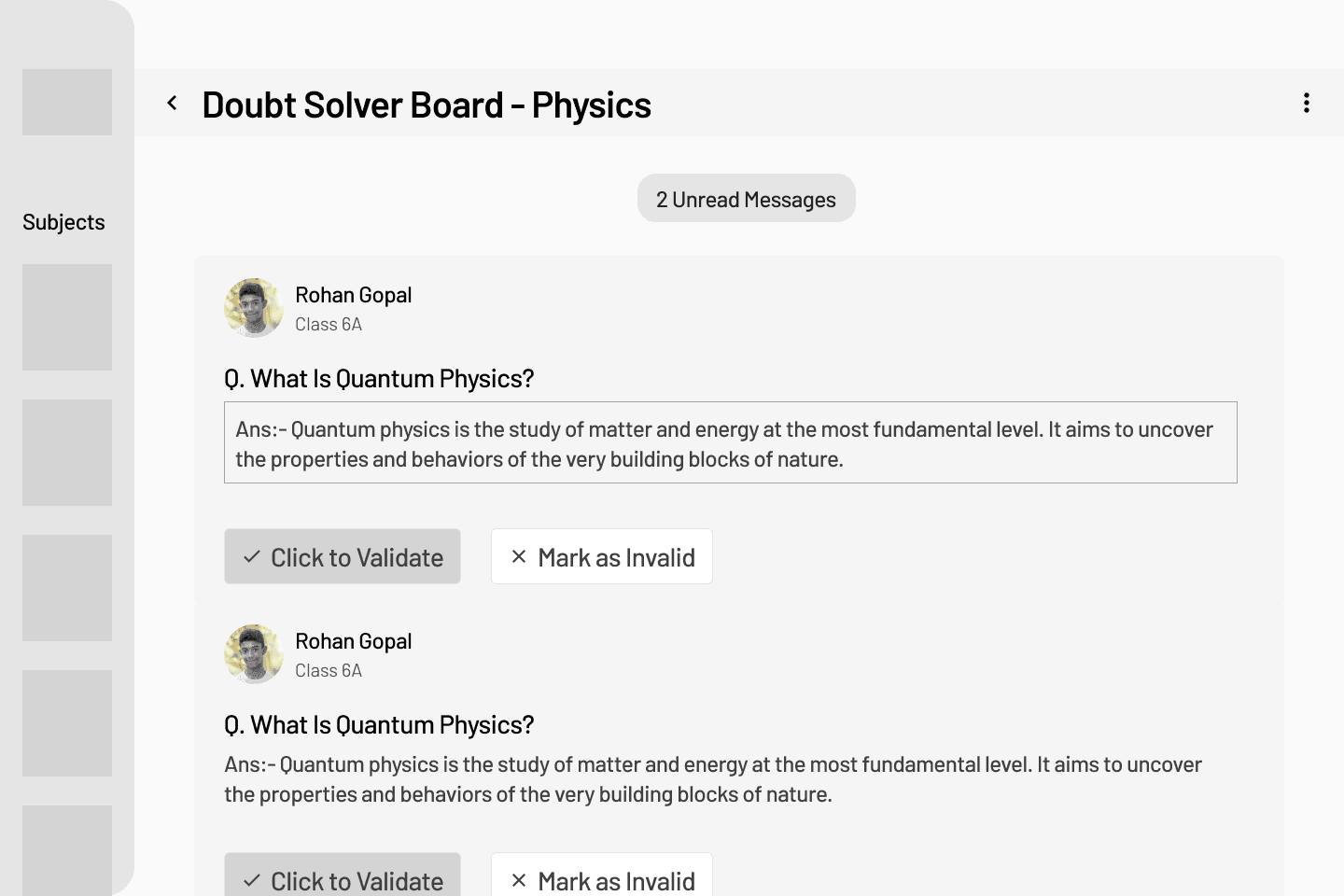
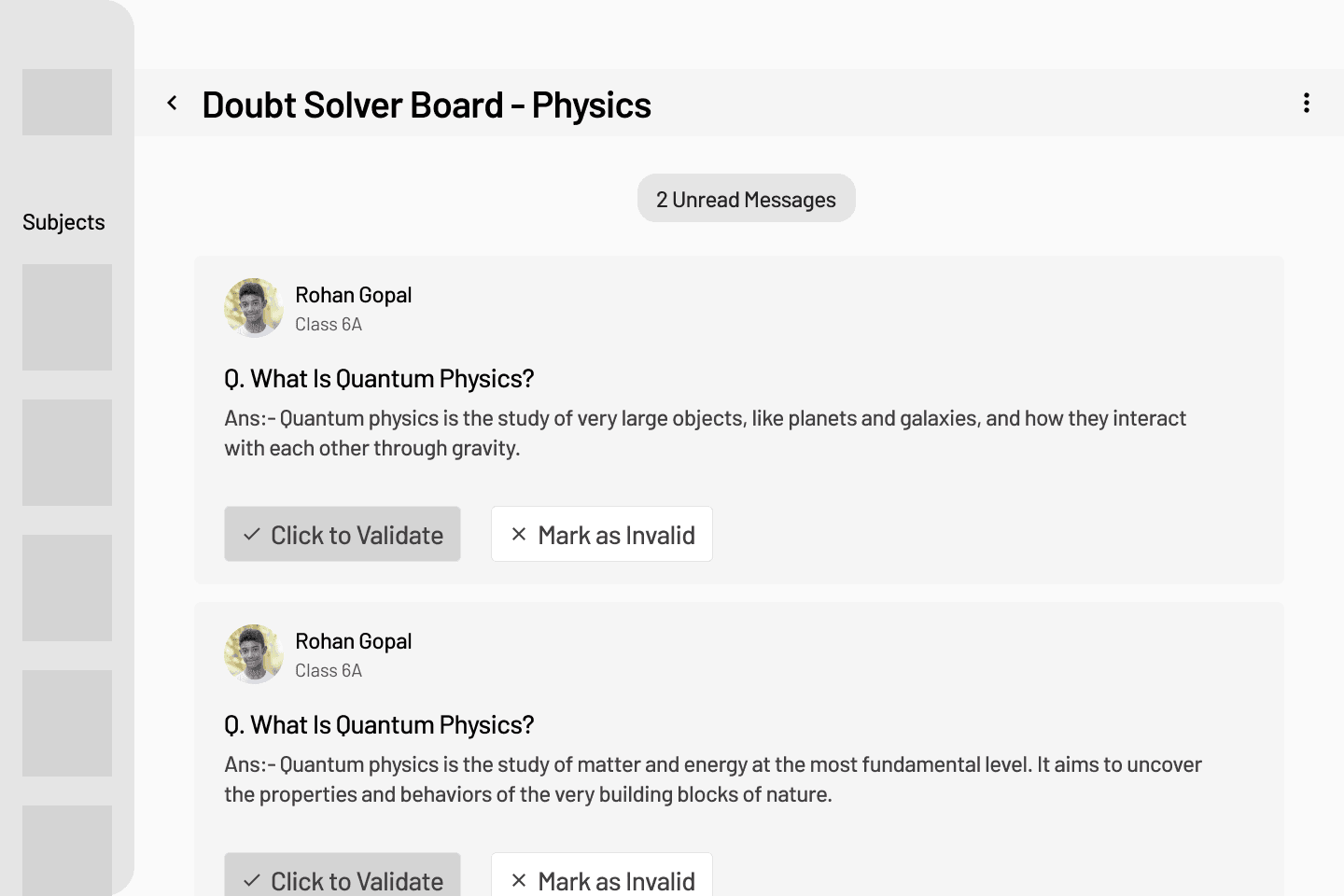
When a student submits a doubt, AI generates an initial response based on the subject, class, curriculum, and historical knowledge. Instead of publishing this answer directly, it is sent to the teacher for review.
Teachers can:
Edit AI-generated responses
Rewrite explanations
Add classroom-specific context
Improve language and examples
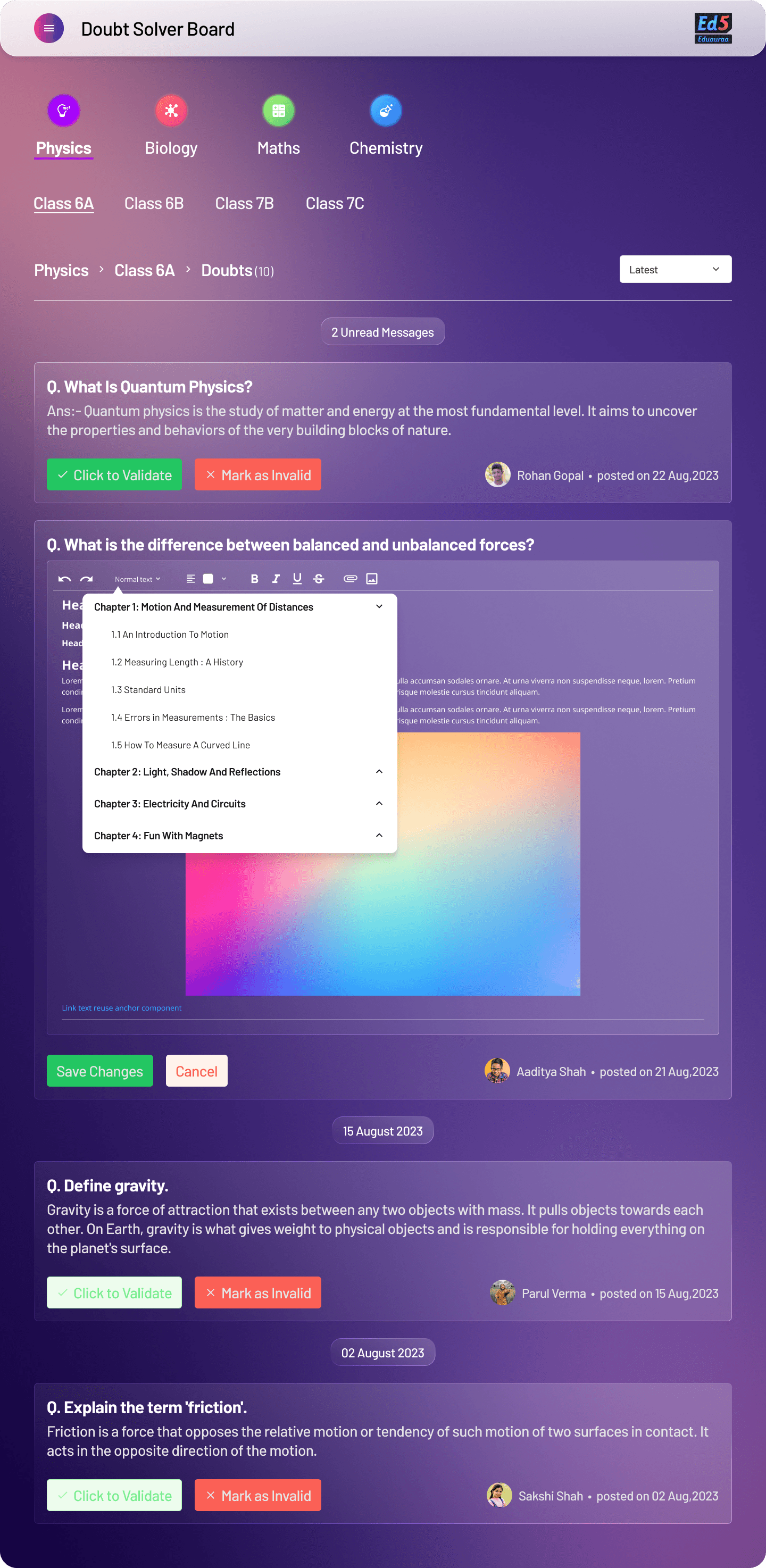
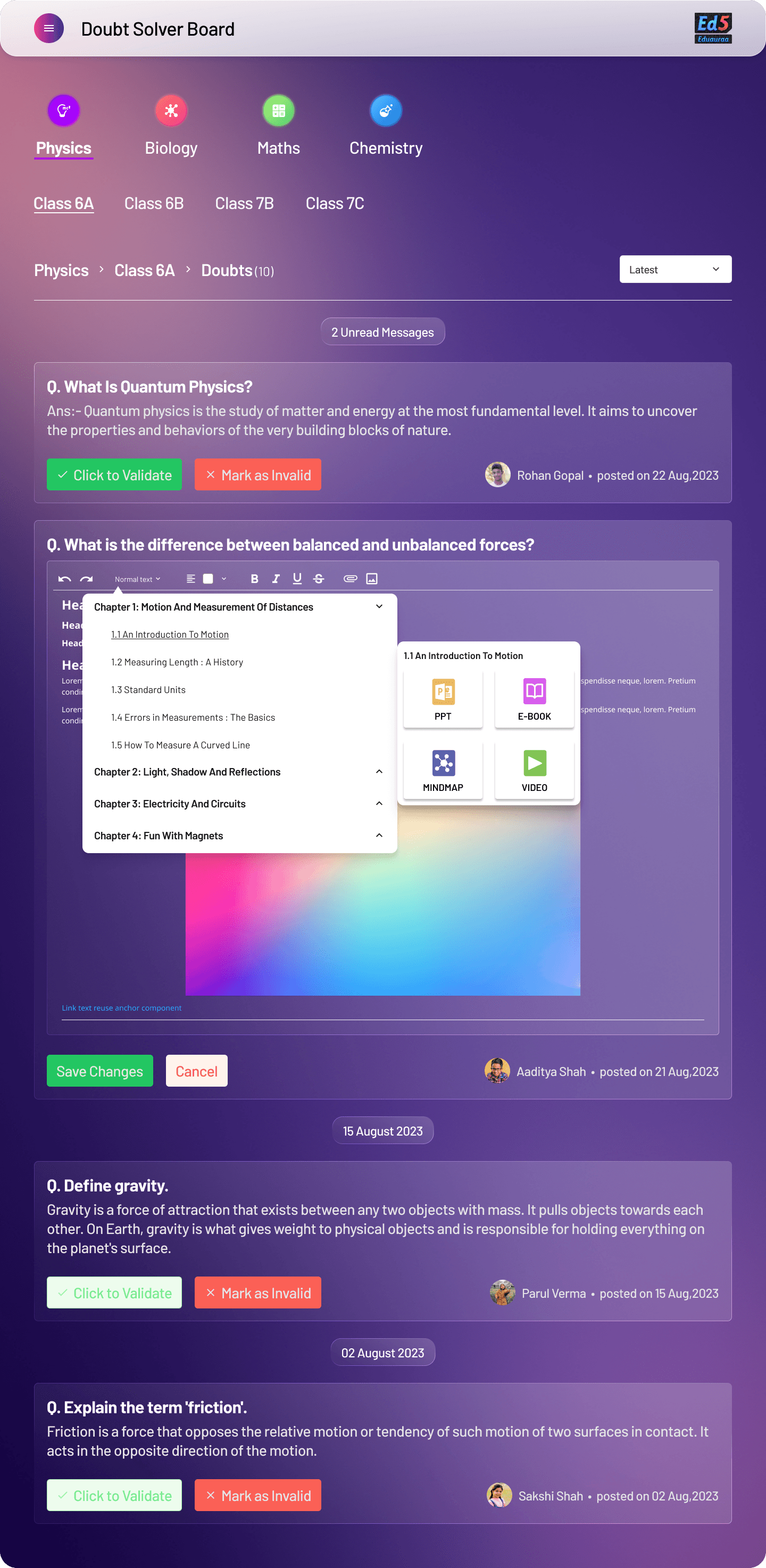
Attach additional learning resources
Approve or reject AI suggestions
Only teacher-approved responses become visible to students and are stored as validated academic content.
AI-generated responses that haven't been approved remain available only as internal references, ensuring that every published answer meets the school's academic standards.
Key Features
AI-Assisted Answer Generation
Students submit doubts categorized by subject, class, chapter, and topic.
AI instantly generates a contextual draft answer, significantly reducing teacher effort while maintaining curriculum relevance.
Human-in-the-Loop Validation
Teachers receive AI-generated responses before publication.
They can:
Edit
Improve
Personalize
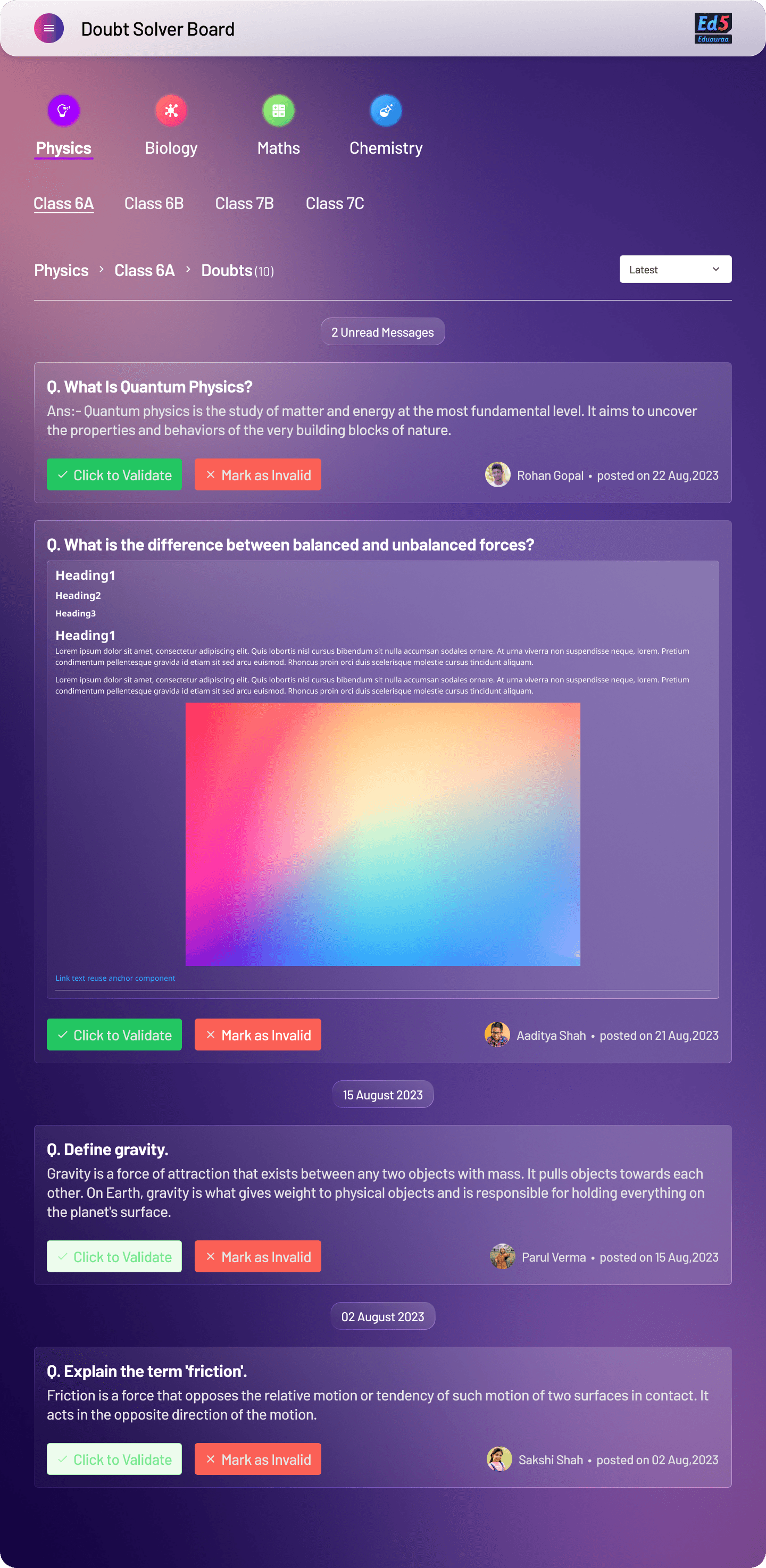
Validate
Reject
This ensures every answer reflects both AI intelligence and teacher expertise.
Curriculum-Aware Knowledge Base
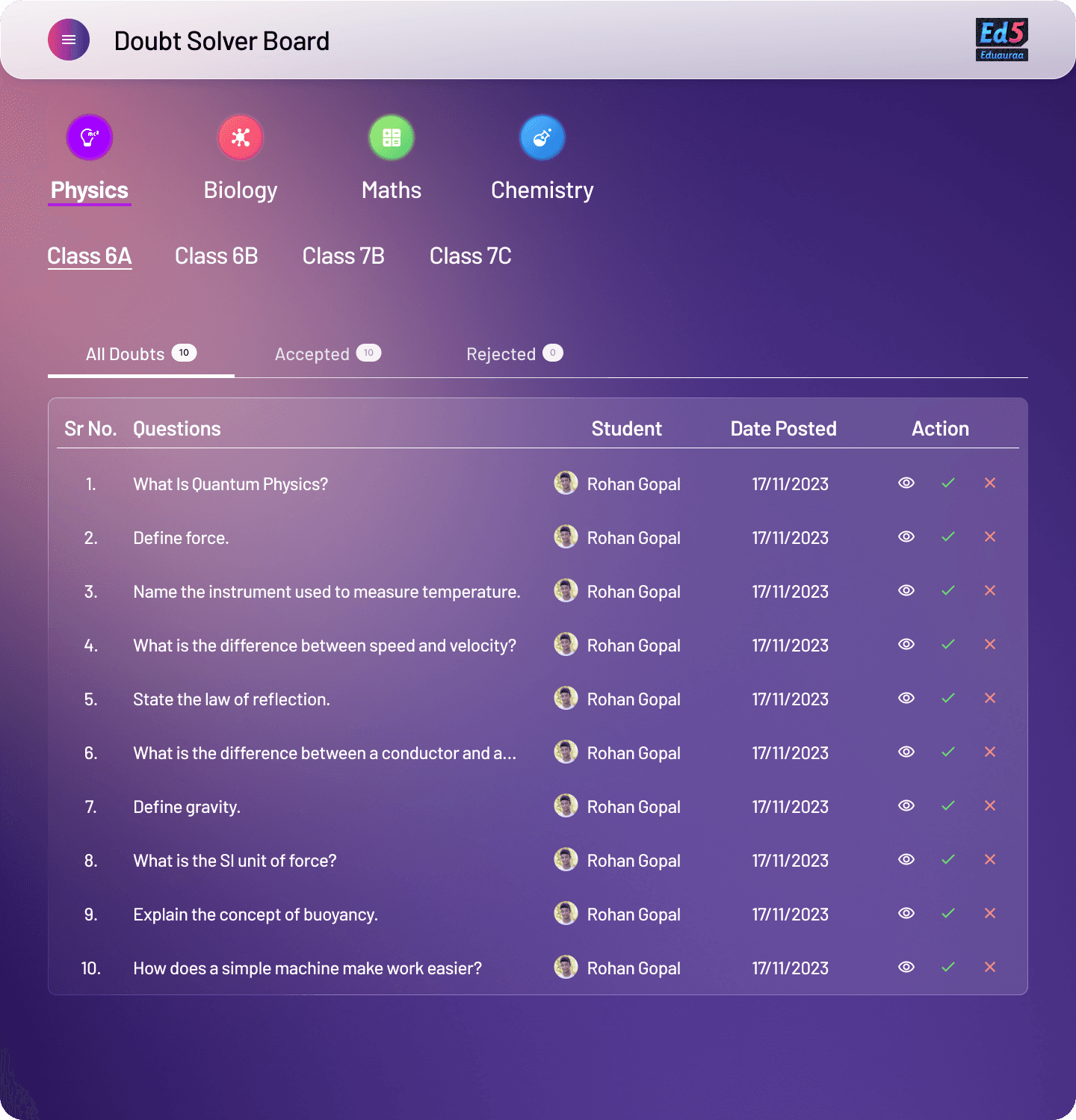
Every validated doubt becomes part of a searchable repository organized by:
Subject
Class
Chapter
Topic
Students can quickly discover previously answered questions without creating duplicate requests.
Contextual Learning Resources
Teachers can enrich validated answers by attaching chapter-specific resources including:
Videos
PPTs
E-books
Mind Maps
Practice Worksheets
Additional Reading Material
Instead of answering a single question, the system encourages deeper learning.
Role-Based Experience
Student
Ask academic doubts
Search validated answers
Access AI-recommended learning resources
Learn independently
Teacher
Review AI-generated responses
Edit and personalize explanations
Validate or reject answers
Build trusted academic content
Administrator
Monitor activity
Review moderation quality
Track engagement
Analyze platform adoption
Ideation
Instead of allowing AI to answer students directly, I explored a Human-in-the-Loop AI workflow where AI assists educators rather than replacing them.
The core design principles were:
AI drafts, teachers decide.
Every solved doubt becomes reusable knowledge.
Keep educators in complete control of published content.
Connect doubts directly with chapters and learning resources.
Surface contextual content that helps students learn beyond the immediate answer.
This approach balanced automation with academic trust while encouraging long-term knowledge building.
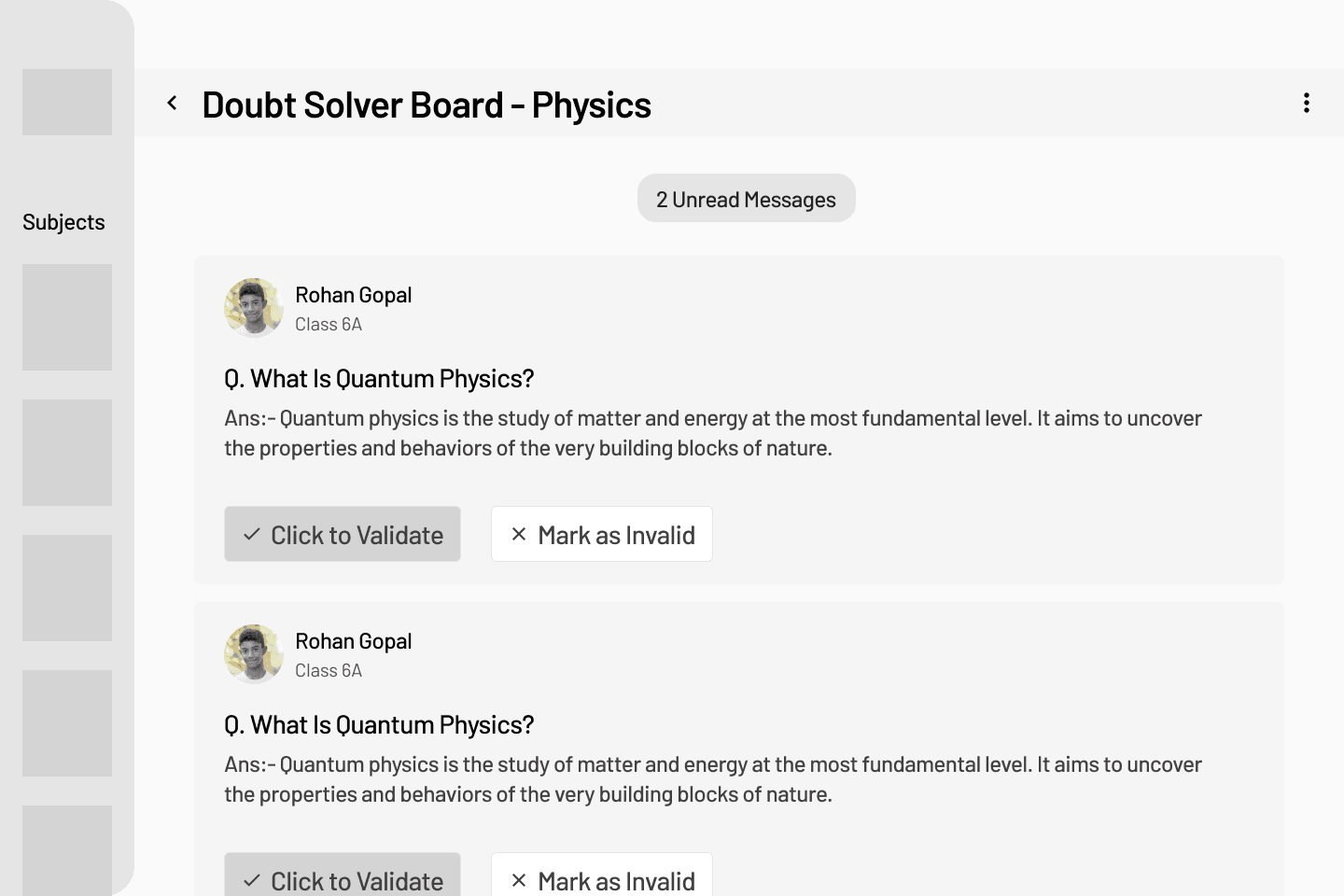
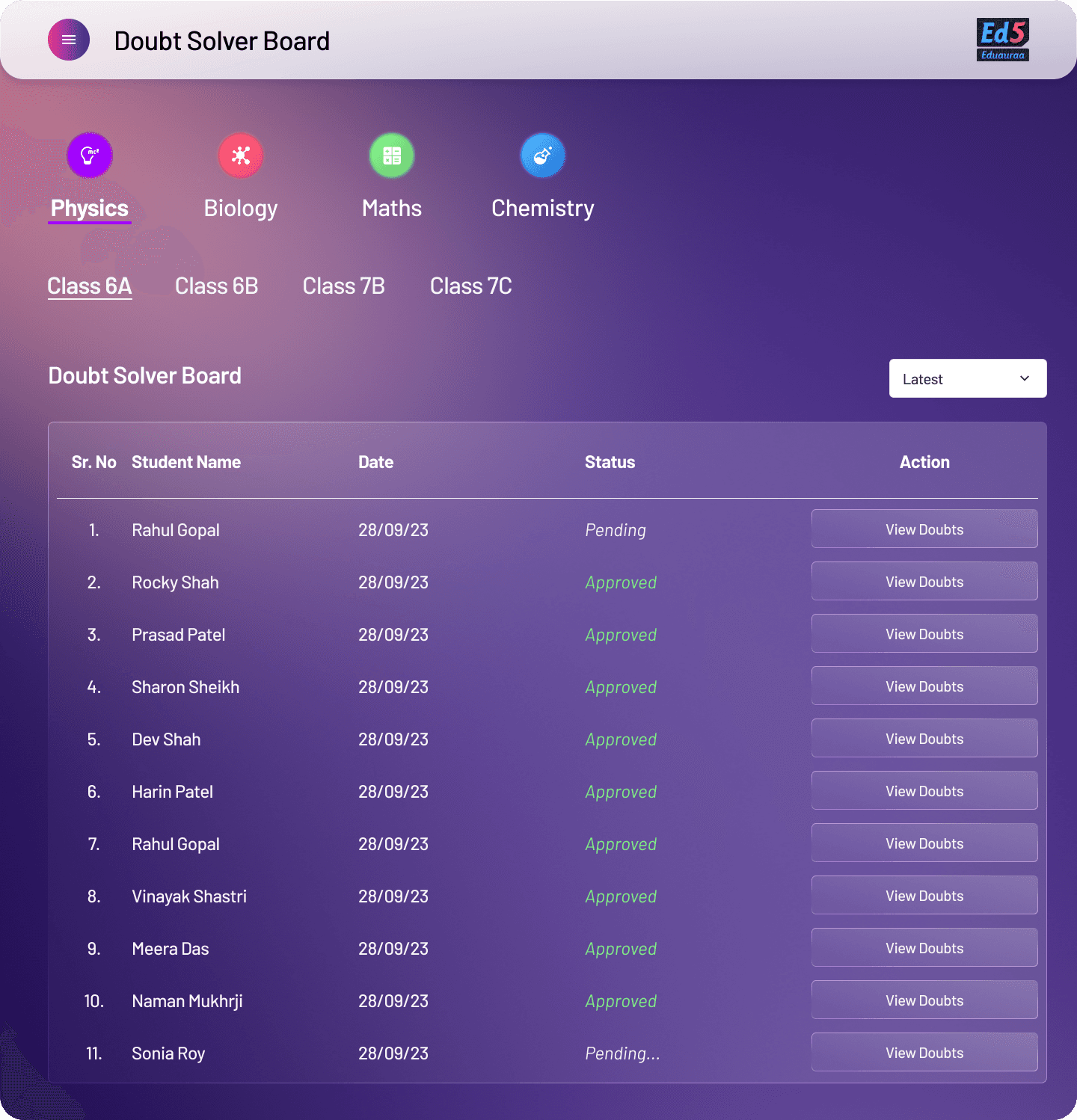
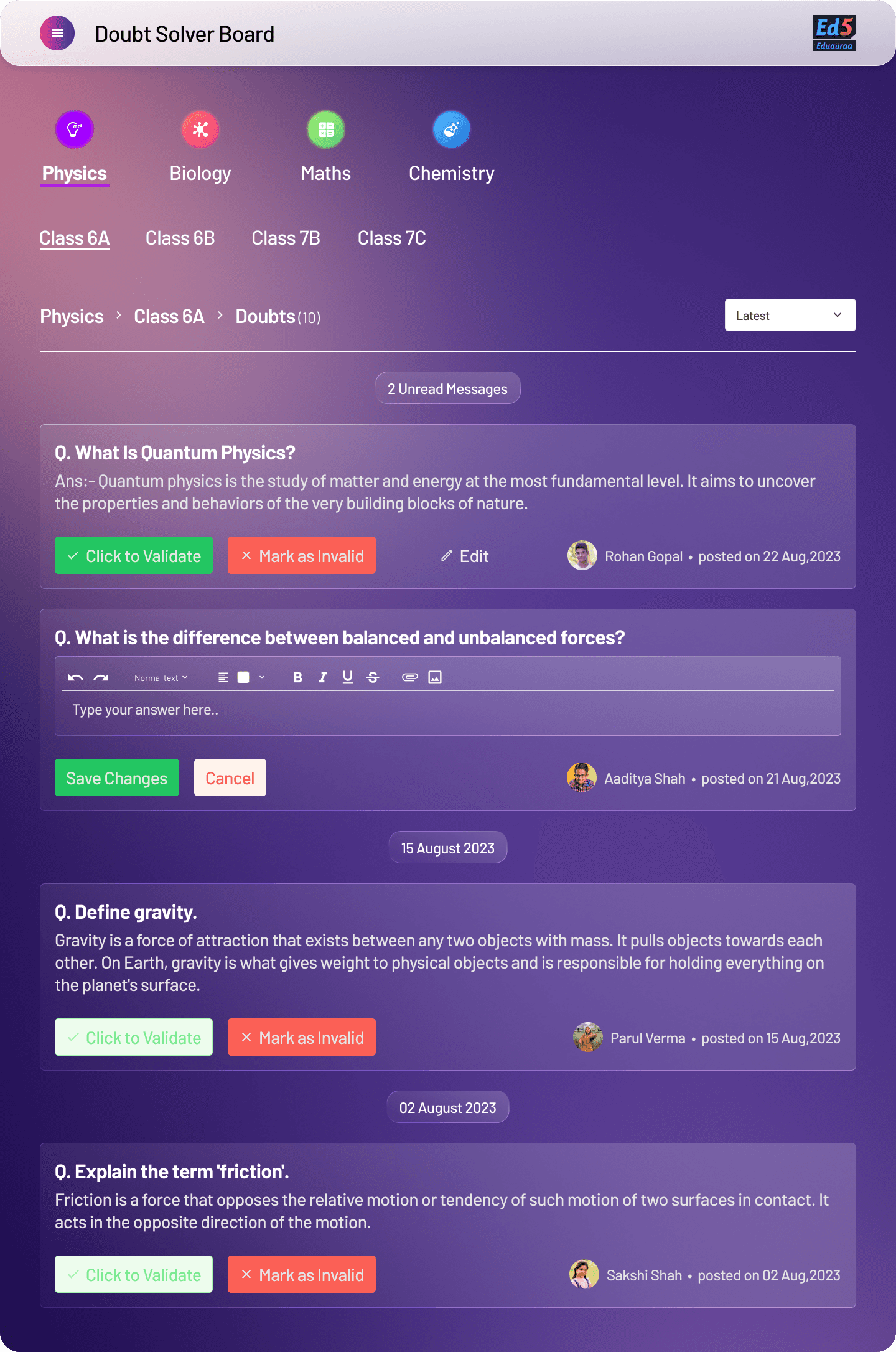
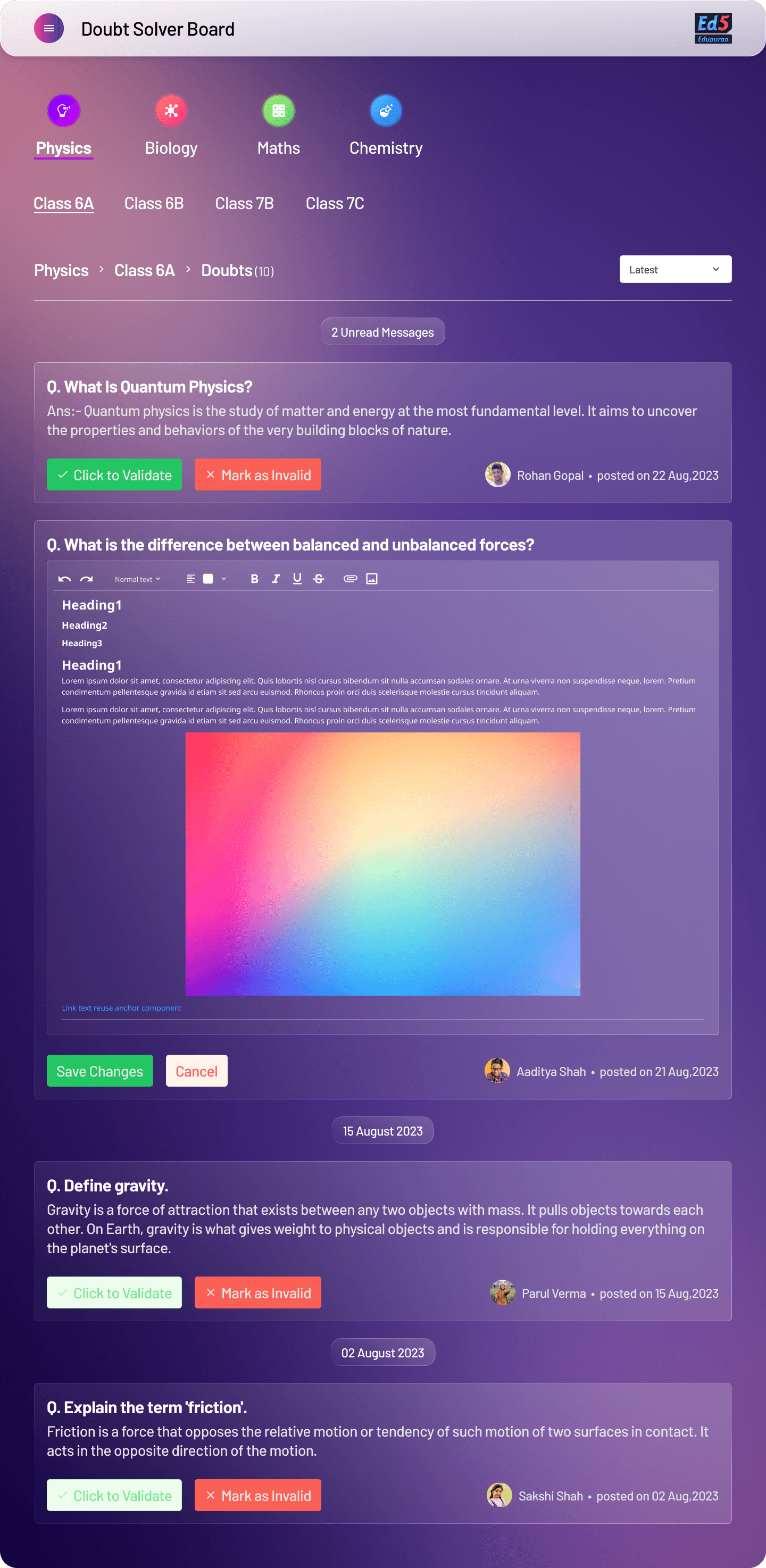
Designs
Design Process
I designed the feature from 0→1, including:
Product discovery
User research
Problem definition
Information architecture
User flows
Wireframing
Interaction design
High-fidelity UI
AI workflow mapping
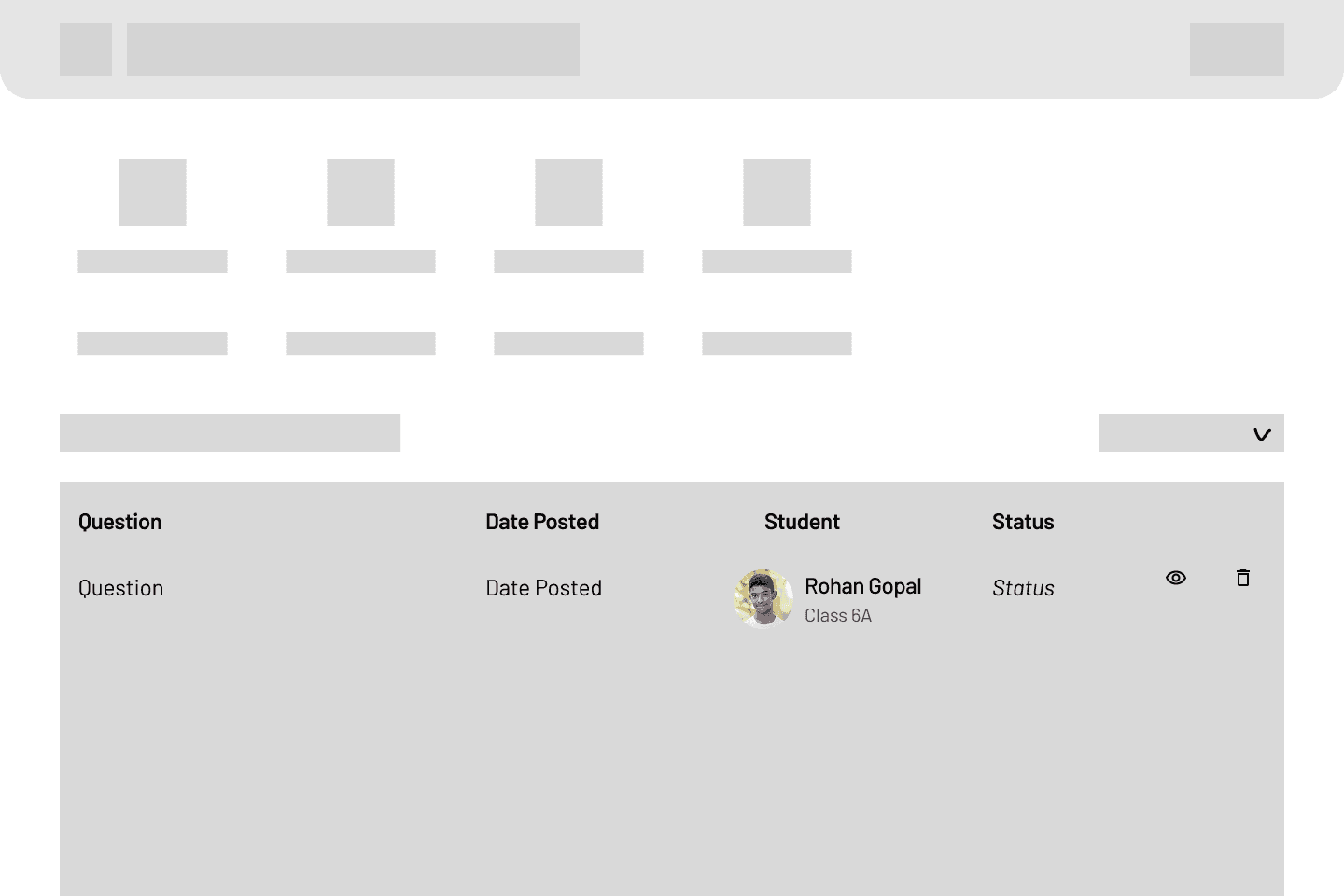
Teacher moderation experience
Knowledge management architecture
The interface was intentionally designed to minimize cognitive load while supporting complex moderation workflows. Clear hierarchy, chapter-based organization, and contextual actions enable teachers to review and approve content efficiently without disrupting their daily routines.
Lessons